
Every bride dreams of that perfect moment in her wedding dress. It’s more than fabric; it’s heritage, emotion, and memories. Choosing between Banarasi and Kanjivaram silks is a big decision.
Do you like the gold brocades of the North or the South’s temple weaves? Your choice shows your style. A comparison helps match your style with your wedding’s cultural legacy. Knowing the difference between a banarasi vs kanjivaram saree makes you feel confident and beautiful on your big day.
Key Takeaways
- Understand the historical significance of India’s most popular bridal silks.
- Learn how to match your wedding attire with your personal comfort and style.
- Discover the unique weaving techniques that set these two fabrics apart.
- Evaluate the weight and drape of each silk to suit your wedding climate.
- Make an informed decision that honors your regional traditions and aesthetic preferences.
The Cultural Significance of Silk Sarees in Indian Weddings
Silk sarees are more than just beautiful. They hold deep cultural meaning in Indian weddings. These clothes connect old traditions with today’s love celebrations. Picking the right wedding attire is seen as a special way to honor family history.
The Role of Silk in Traditional Ceremonies
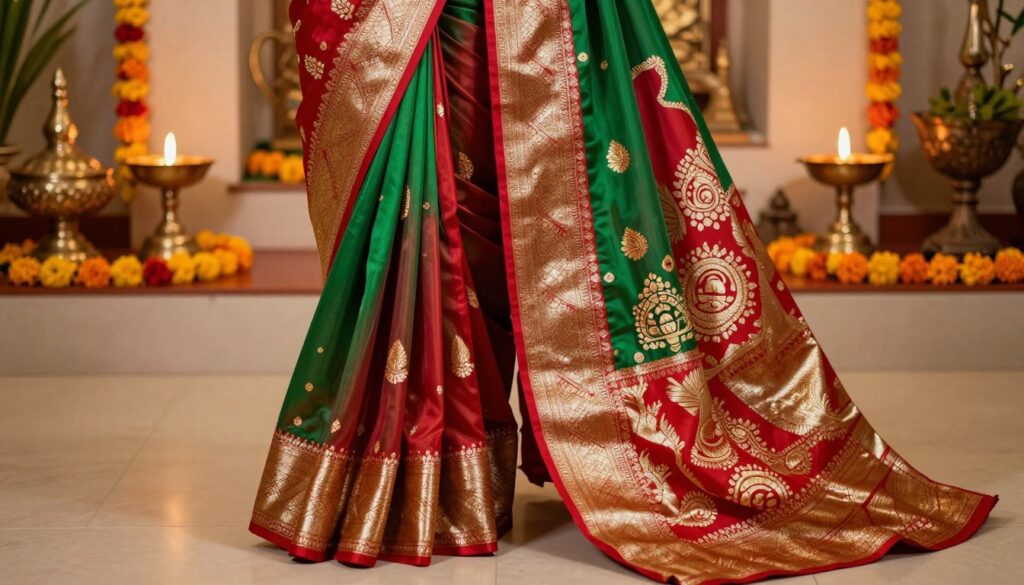
In many Indian homes, silk is the top choice for a bride. It’s thought to bring good luck and blessings. This traditional pick shows respect for long-held values.
The feel of the fabric makes the event feel more special. Whether it’s in the North or South, silk makes the vows more meaningful. It’s a timeless piece that shows the bride’s elegance.
Symbolism of Colors and Motifs in Bridal Attire
Every part of a bridal saree has a special meaning. Colors and designs show wishes for the bride’s future. For example, red is often chosen for its meaning of passion and good luck in traditional weddings.
The designs on the fabric tell stories of nature and myths. These patterns aim to bring protection and luck to the couple. Here’s a table showing what colors mean in Indian wedding attire:
| Color | Symbolic Meaning | Cultural Context |
|---|---|---|
| Red | Prosperity and Passion | Most auspicious for ceremonies |
| Gold | Wealth and Purity | Represents divine light |
| Green | Fertility and Growth | Common in harvest-based traditions |
| Yellow | Happiness and Joy | Associated with pre-wedding rituals |
Understanding the Banarasi Saree: Origins and Craftsmanship
The Banarasi saree’s story starts in Varanasi’s lively streets. This city is known for its deep spirituality. It’s where one of the world’s most beautiful weaving traditions was born.
For ages, these sarees have meant grace, luxury, and North India’s rich culture.
Historical Roots in Varanasi
Varanasi has always been a hub for fine textiles. It drew artisans from everywhere. During the Mughal era, the craft reached its peak.
Royal support mixed Persian designs with Indian ones. This mix made the handloom industry very special.
These sarees’ legacy is kept alive by skilled families. Each one tells the story of Varanasi’s artistic growth. Today, they’re key to the local economy and culture.
The Intricate Art of Zari and Brocade Weaving
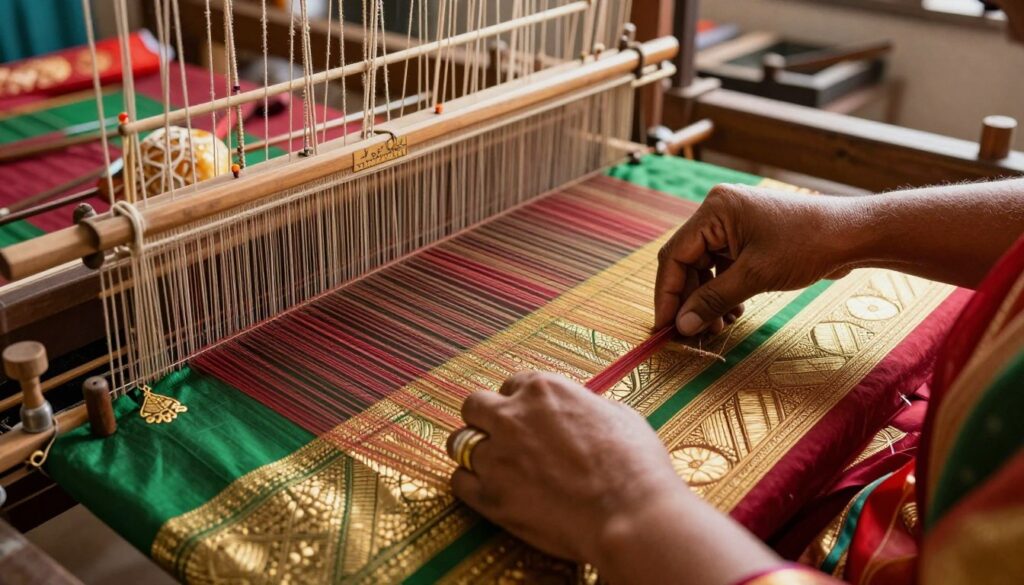
A real Banarasi saree shines because of its brocade. Artisans use zari, gold and silver threads, for its patterns. This work is very detailed and takes a lot of time.
Making one saree can take weeks or months. Weavers use old looms to make sure every design is perfect. This care makes real sarees stand out from fake ones.
| Feature | Description | Impact |
|---|---|---|
| Zari Quality | Pure gold or silver threads | High luster and value |
| Weaving Technique | Intricate brocade patterns | Dense, luxurious texture |
| Motif Style | Floral and Mughal-inspired | Timeless elegance |
| Production Time | Hand-loomed over weeks | Unique, heirloom quality |
Exploring the Kanjivaram Saree: Heritage and Weaving Techniques
In Kanchipuram, a special art has been passed down for ages. It’s not just clothes; it’s a cultural treasure that shows the beauty of South Indian weddings. The weaving is key, making each saree a unique piece of art.
The Legacy of Kanchipuram Weavers
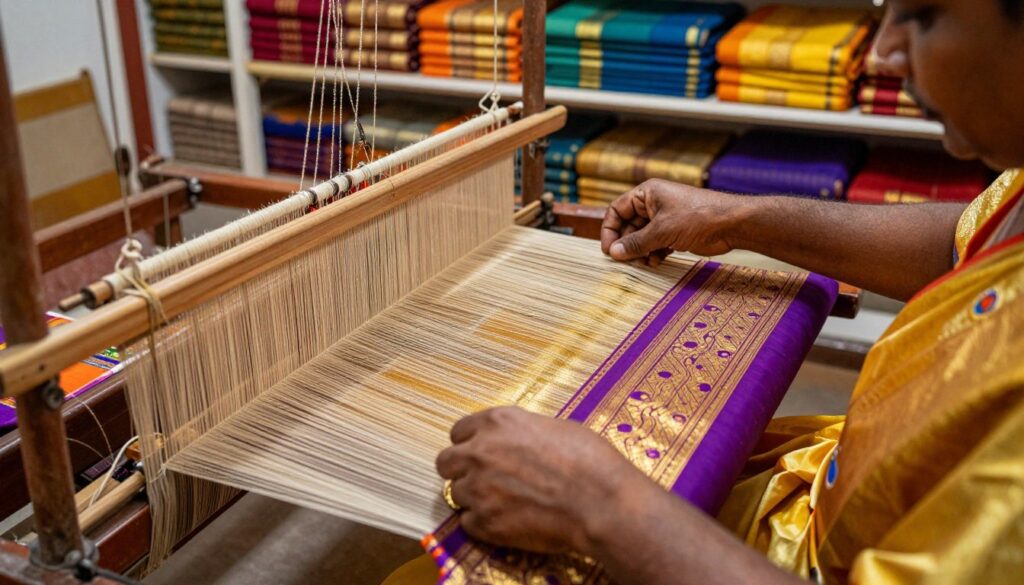
The history of these sarees is tied to the Kanchipuram community’s love. Families have spent their lives learning the weaving skills from their elders. This keeps the tradition alive, even as fashion changes.
Each saree is made by weaving three silk threads together. This hard work needs patience and skill. The result is a durable and heavy-duty fabric that lasts for years, often kept as a family treasure.
Distinctive Features of Pure Mulberry Silk
A real Kanjivaram saree uses top-quality, pure mulberry silk. This gives it a luxurious sheen and weight. It looks great and stays in shape during long weddings.
Artisans use bright colors and gold zari in special ways. These colors and patterns show the beauty of South Indian tradition. Choosing pure mulberry silk makes the saree visually stunning and very strong for the big day.
A Detailed Banarasi vs Kanjivaram Saree Comparison
When we look at the banarasi vs kanjivaram saree, we see big differences. These differences come from how they are made. Both are top picks in Indian textiles, but they feel different when you wear them. Knowing the comparison helps brides pick the right saree for their big day.
Key Differences in Weaving Methods
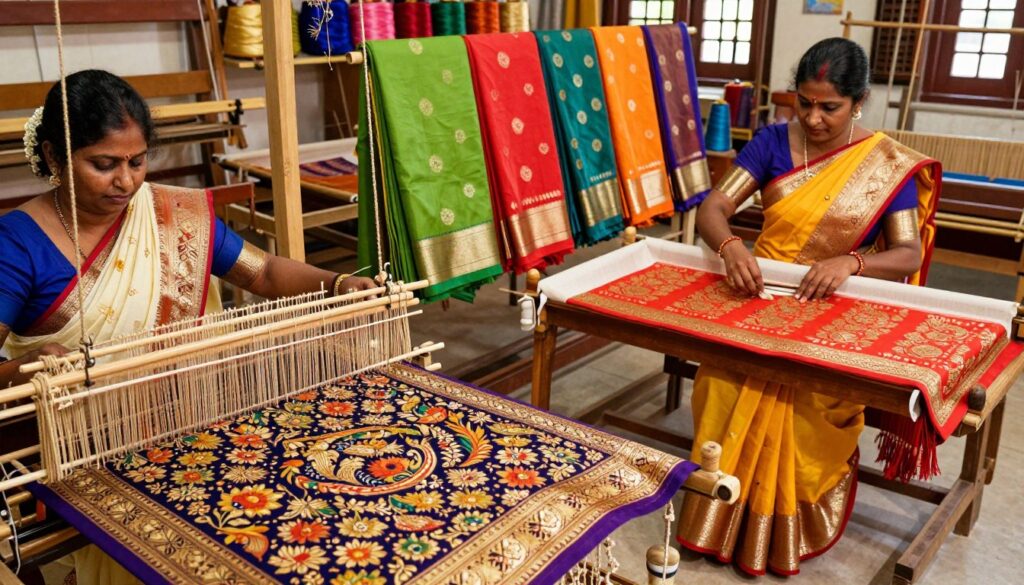
The Banarasi style is famous for its fancy brocade weaving. It uses extra threads for cool patterns like flowers or Mughal designs. The makers use a special loom to make the fabric thick and soft.
The Kanjivaram method is special because of its three-ply interlocking weft. This makes the fabric strong and long-lasting. The edges and the main part are made separately and then joined very carefully.
“The soul of a saree is found in the rhythm of the loom; where the North weaves stories of Mughal grandeur, the South anchors itself in the structural integrity of temple-inspired geometry.”
Geographical Influence on Design
The place where the saree is made shapes its look. Banarasi sarees get their look from Varanasi’s spiritual vibe. They have Persian designs and lots of gold, showing off North India’s rich past.
Kanjivaram sarees, on the other hand, are inspired by Tamil Nadu’s temples. You’ll see things like rudraksha and peacocks, just like in old temples. This makes each saree a piece of cultural history.
| Feature | Banarasi Saree | Kanjivaram Saree |
|---|---|---|
| Primary Weaving | Brocade | Interlocking Weft |
| Design Focus | Mughal/Floral | Temple/Geometric |
| Weight | Heavy/Dense | Sturdy/Structured |
Aesthetic Differences: Patterns, Motifs, and Color Palettes
From the Mughal era to temple architecture, these sarees have unique looks. Knowing the differences helps brides find the perfect saree for them.
Floral and Mughal-Inspired Banarasi Motifs
Banarasi sarees are known for their opulent designs. They take inspiration from Mughal art, with floral patterns.
The weaving uses lots of zari work for a rich look. Motifs like ‘kalga’ and ‘bel’ show a courtly style that’s loved for ages.
Temple Borders and Traditional Kanjivaram Designs
Kanjivaram sarees have bold, geometric designs. They often show temple architecture in their patterns.
Look for ‘rudraksham’, ‘mayil’, and ‘yali’ motifs. These are woven in thick silk, making the saree stand out.
The Significance of Contrast Borders
Kanjivaram sarees use contrast borders for a bold look. This makes the saree’s body and pallu stand out.
This vibrant color blocking is perfect for a traditional wedding. It makes the saree look great in photos and stays elegant forever.
Fabric Texture and Drape: How They Feel and Wear
Wearing a silk saree feels as good as it looks. The designs grab our eyes first. But how it feels on your body is key to comfort during long events.
Choosing the right fabric makes you feel confident and graceful all day.
Weight and Comfort for Long Wedding Hours
Banarasi sarees feel luxurious and heavy because of their dense brocade. This makes you look regal but might feel heavy in summer or outside.
Kanjivaram silk has a sturdier, crisp texture that keeps its shape well.
Kanjivaram silk is made with thick threads. This makes it strong and less wrinkly. Many brides like it because it’s easy to manage during busy ceremonies.
Choosing pure handloom silk means it breathes better than fake ones.
“A saree is not just a garment; it is a canvas of tradition that drapes the soul in elegance and history.”
Draping Styles for Different Body Types
How you drape your saree changes how you look and feel. For a slimmer look, try the Nivi drape. It flows well and shows off your curves.
For more coverage, try the Gujarati style. It puts the pallu in front. This helps with heavy Banarasi borders. Try different drapes before the big day to move freely and enjoy your celebration.
Price Points and Investment Value
Buying a silk saree is more than fashion. It’s keeping a rich culture alive. When you pick a wedding dress, you’re getting something to last for years. Knowing the cost helps you choose wisely.
Factors Influencing the Cost of Silk
The price of a handloom saree depends on a few things. The main factor is the zari’s purity. Gold or silver threads make it more valuable than fake ones.
The design’s complexity also affects the cost. Detailed patterns take a lot of time and skill. You’re paying for the art and effort in every thread.
Identifying Authentic Handloom Silk
To make a good choice, know the difference between real and fake handloom silk. Real silk has small weave mistakes. These show it was made by hand, not by machine.
Look for the Handloom Mark or government tags to confirm it’s real. The back of the saree also tells a story. Hand-woven patterns feel different from machine-made ones. Choosing quality means your saree will stay beautiful and valuable for a long time.
Styling Tips for Your Wedding Day
Styling a traditional saree for your big day is like art. It mixes old traditions with your own style. You want to look balanced and elegant, showing respect for the past and your own personality.
Choosing the right accessories can make your silk saree shine. It brings out the beauty of your special silk.
Choosing the Right Jewelry for Banarasi Sarees
Banarasi sarees have fancy designs that need fancy jewelry. Kundan or Polki sets are great because they match the saree’s rich look. They add a royal touch without hiding the saree’s beauty.
Wear a big choker or layered necklace to highlight your neck. If your saree has a thick border, pick smaller earrings. This keeps your look refined and graceful.
Complementing Kanjivaram Sarees with Traditional Gold
Kanjivaram sarees have bright colors and bold borders. They look amazing with classic gold jewelry. Temple Jewelry with gods or nature designs is the best choice. Yellow gold makes the saree’s colors pop.
For a traditional look, try a long Kasulaperu necklace or a gold waist belt called an Oddiyanam. These pieces show off the saree’s design and add cultural depth. The secret to a beautiful look is matching the saree’s boldness with your gold jewelry’s shine.
Maintenance and Preservation of Heirloom Silk
Your wedding saree is special. It’s not just fabric. It’s a treasure that can last for years with care. Follow simple steps to keep your saree beautiful for your family.
Cleaning and Storage Best Practices
Take your saree to a professional cleaner. They know how to keep it perfect. Don’t wash it at home because water can harm the silk.
Keep your saree in a breathable place. Don’t use plastic bags. Use clean cotton or muslin to wrap it. This keeps it fresh and dust-free.
Protecting Zari Work from Tarnishing
The zari work is very delicate. It can tarnish if it gets wet or exposed to chemicals. Keep it away from things that can harm it.
Store your saree in a cool, dark spot. Use silica gel to keep moisture away. Wrap the zari parts in acid-free tissue paper to protect them.
| Maintenance Task | Recommended Frequency | Key Benefit |
|---|---|---|
| Professional Dry Cleaning | Once every 1-2 years | Removes deep-set stains |
| Air Exposure | Every 3-6 months | Prevents musty odors |
| Refolding | Every 3 months | Avoids permanent creases |
| Zari Inspection | Before and after use | Detects early tarnishing |
Conclusion
Choosing between a Banarasi and a Kanjivaram saree is a special journey into Indian textile heritage. Both styles are full of art and grace, making any bridal look better. Your choice depends on the look you want for your big day.
Banarasi silk has a royal feel with its detailed Mughal patterns and soft drape. It’s perfect for brides who love detailed work and a light feel during long events. If you dream of delicate flowers and a fancy look, Banarasi might be for you.
Kanjivaram silk has a bold, vibrant look with its thick mulberry fabric and famous temple borders. It’s great for brides who want a strong look and rich colors. These sarees are also very durable, making them treasures for years to come.
Think about what feels right for you and your family’s traditions. Whether you like the detailed brocades of Varanasi or the strong beauty of Kanchipuram, your choice will be beautiful. Enjoy the legacy of these handloom wonders as you start your new life with confidence and style.